
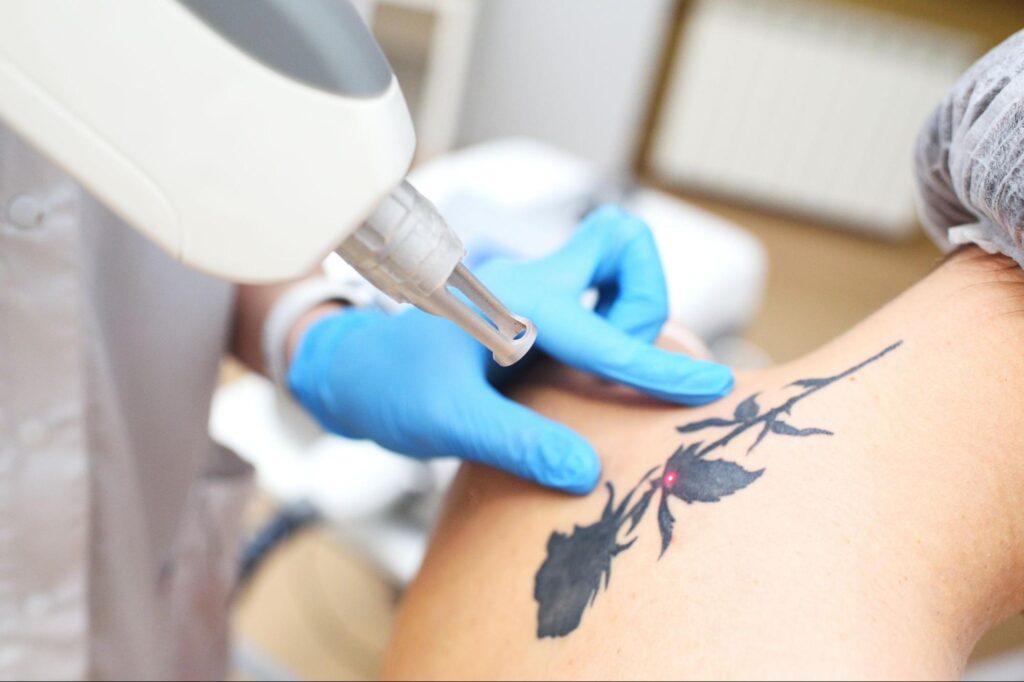
Deciding to remove a tattoo involves understanding the options available for clearing unwanted ink from your skin. Laser tattoo removal is a common procedure, and it uses concentrated light to break down ink particles in the skin. This method targets the pigment inserted into the dermal layer during the original tattooing process. By utilizing specific wavelengths of light, the laser shatters the ink into microscopic fragments. Once the ink is broken down, your body relies on its natural processes to absorb and flush away these tiny particles over several weeks.
What is Laser Tattoo Removal?
Laser tattoo removal is a specialized procedure designed to eliminate permanent ink. The equipment uses brief, intense pulses of light energy to target the tattoo. Because different ink colors absorb different wavelengths of light, technicians use varying laser settings based on the specific colors present in your design. Black ink is typically the easiest to remove because it absorbs all laser wavelengths, but lighter colors require specific laser types.
The procedure requires specialized equipment and is performed by trained professionals. The laser targets the pigment, but it leaves the surrounding tissue largely unaffected. This precision helps minimize damage to the surrounding skin area while effectively breaking apart the heavy ink molecules that traditional fading methods cannot reach.
How Does the Process Work?
The process of removing a tattoo is not a single event; it requires a series of scheduled sessions spaced several weeks apart. This spacing allows your body adequate time to clear the shattered ink particles and for your skin to recover before the next session. Here is what you can expect during a standard removal session:
- Assessment: The technician evaluates the tattoo to determine the appropriate laser settings for your specific ink colors and skin type.
- Preparation: The technician may apply a topical numbing cream or use a cooling device to help manage physical discomfort.
- Laser Application: The technician guides the laser over the tattoo. The device delivers quick pulses of light, which often feel like small rubber bands snapping against the skin.
- Aftercare: Following the session, the technician bandages the area and provides specific care instructions to keep the site clean and protected.
What Influences Tattoo Removal?
Several variables determine how quickly and effectively a tattoo will fade. Because every person and every tattoo is different, the timeline for complete removal varies widely. One key factor is the tattoo’s age. Older tattoos often fade more quickly, and this means you may need fewer sessions for an older design. Over time, the body naturally breaks down some ink on its own. The natural breakdown provides a starting advantage for the laser removal process.
The ink color and density also play a significant role. Darker, single-color tattoos are generally easier to treat, but those with multiple colors and heavy shading require additional time and treatment. Skin tone also influences the process; when there is greater contrast between skin tone and ink color, the laser is better able to target the pigment. Technicians will adjust their approach to confirm the removal process is both safe and effective for all skin types. Results may vary from person to person.
Ask About Tattoo Removal Today
Understanding the steps and variables involved in laser tattoo removal can help you prepare for the commitment required. The process requires patience, adherence to aftercare guidelines, and multiple visits to achieve the desired results. If you are looking into fading or completely removing unwanted ink, reaching out to a professional is recommended. Ask about tattoo removal today to schedule a consultation and evaluate your specific tattoo, and they can help you establish a clear plan for your skin.