
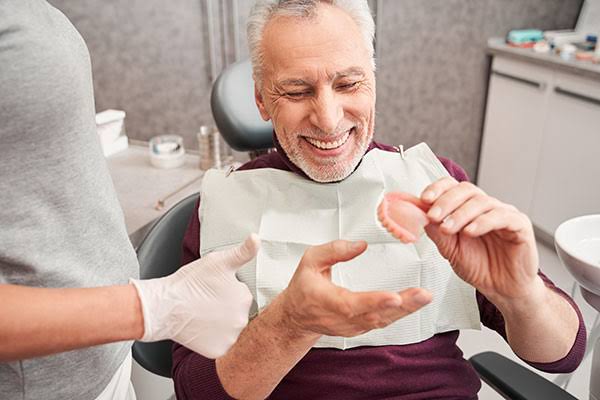
Dentures are removable or fixed dental appliances that replace missing teeth and the surrounding tissue. They are made from materials such as acrylic resin, porcelain, or metal, and they’re shaped to fit the contours of your mouth. Custom dentures are made to fit your mouth, supporting your comfort and daily function. People who have lost teeth due to decay, injury, or age-related changes may benefit from these dental restorations. Here’s more information on the benefits of dentures:
How Dentures Improve Oral Functioning
Missing teeth can affect how you eat, speak, and present yourself in social settings. Dentures fill these gaps and help restore facial and jaw structure. When teeth are absent, the surrounding muscles in the mouth and face may lose support, but a properly fitted denture can help maintain facial shape.
If you struggle to chew certain foods or speak clearly due to missing teeth, a well-fitted set may help you regain these abilities. A custom denture set is built around your bite pattern and mouth measurements. This tailored approach reduces slipping and pressure points, making the appliance easier to wear throughout the day.
How They Are Customized
Customization starts with an evaluation of your mouth, remaining teeth, and gum health. Your dental provider takes impressions and measurements to create an appliance that matches your specific needs. There are three common denture types:
- Complete Dentures: Complete types replace an entire arch of teeth, either the upper, lower, or both arches. They rest directly on the gums and rely on suction and the shape of your mouth for stability. These are suited to people who have lost all their natural teeth in one or both arches.
- Partial Dentures: Partial types replace one or several missing teeth while leaving your natural teeth in place. They typically attach to existing teeth using clasps or precision connectors, so they help fill gaps and keep remaining teeth from shifting position.
- Implant-supported Dentures: Implant-supported options connect to small posts placed in the jawbone. The implants anchor the appliance, providing a more secure hold than gum-supported options. This approach may appeal to people who want reduced movement while chewing.
How To Get Custom Restorations
Custom dentures can be adjusted across several dimensions to match your mouth. Providers select tooth color, size, and shape so the final appliance blends with your natural appearance. The base is tinted to resemble your gum tissue, and the arch shape is contoured to your mouth measurements.
The customization process usually spans several appointments, beginning with your provider examining your mouth and taking impressions. A trial appliance is then created so you can check the fit, bite, and appearance of your restoration. Adjustments are made before the final version is produced, and follow-up visits help fine-tune the fit as your mouth settles.
Speaking and eating may feel different at first, but most people adapt within a few weeks. You should expect a short adjustment period after receiving your new restorations. Regular cleaning and periodic check-ups help maintain your appliance and keep it fitting appropriately. If sore spots develop, contact your dentist, and your provider can refine the shape during a follow-up.
Benefit From Custom Dentures
To learn about your denture options, schedule a consultation with a dentist specializing in these oral restorations. Whether you need a complete set, a partial appliance, or an implant-supported option, the customization process focuses on matching your bite, appearance, and mouth structure. A dental professional can evaluate your mouth and help you determine a solution that fits your needs.