

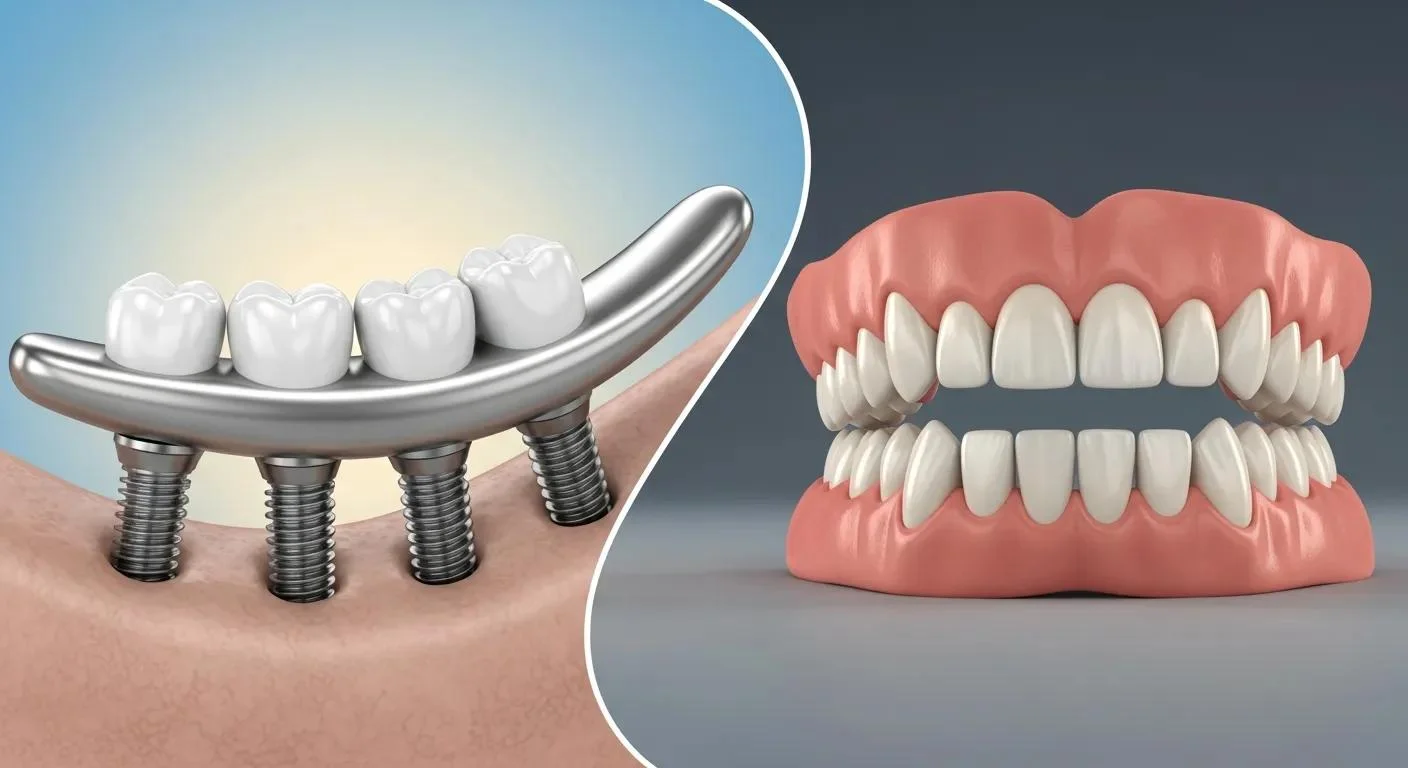
Dental implants are small titanium posts that a dentist places into the jawbone to replace missing tooth roots. A custom crown, bridge, or denture then attaches to these posts. Traditional dentures work differently, sitting on top of the gums. To stay in place, dentures rely on suction, adhesive, or metal clasps. Implants integrate with the body, while dentures rest on the surface. Here’s information on dental implants and their benefits:
Long-Lasting Restoration Option
One of the main reasons people get dental implants is their durability, as they can stay anchored in the jaw for many years with proper care. Traditional dentures typically need relining, adjustment, or replacement over time as the mouth changes shape. This stability comes from a process called osseointegration. After a dentist places the implant post, the surrounding bone gradually grows around and fuses with the titanium surface.
Osseointegration’s biological bonding process holds the implant firmly in position, making the restoration work like a natural tooth root. Because the implant is secured within the bone rather than resting on the gums, it stays put during eating and speaking. Removable dentures can shift or loosen, but a fully integrated implant remains stable.
Supporting Remaining Teeth and Bones
Beyond replacing a missing tooth, implants also support the health of the surrounding oral structures. When a tooth is lost, the jawbone in that area no longer receives the pressure it once did from chewing. This can lead to bone loss in that area of the jaw over time. Implants help address this because they transmit chewing forces directly into the jawbone, similarly to a natural tooth. This stimulation encourages the bone to stay active.
Traditional dentures do not offer this same effect, since they sit above the gum line. Implants can also support neighboring teeth by filling the gap left by a missing tooth. When a space is left open, adjacent teeth may drift or tilt toward it, and a well-placed implant helps maintain proper alignment. This contributes to overall function, including a stable bite and comfortable chewing.
With a secure implant in place, many patients find eating and speaking easier. There is no need to remove the restoration for cleaning in the same way loose dentures require. Routine brushing, flossing, and dental visits typically keep implants in good condition.
Offering More Supportive Dentures
Implants are not only for single-tooth replacement. For people who have lost all or most of their teeth, implants can also work as anchors for a full set of dentures. This approach is called an implant-supported denture. Instead of relying on adhesive or suction, the denture connects to several strategically placed implants. The number of implants varies based on the individual case and the dentist’s assessment. Some systems allow the denture to be removable for cleaning, while others fix it permanently in place. This method can give the denture a firmer hold than a conventional set that rests on the gums.
Learn More About Dental Implants
Choosing between dental implants and traditional dentures depends on your overall oral health and jawbone condition. Implants are a stable, long-lasting restoration because of osseointegration, so they effectively support oral functionality. To explore whether implants are appropriate for you, schedule a consultation with a dental provider who can personalize your care.