
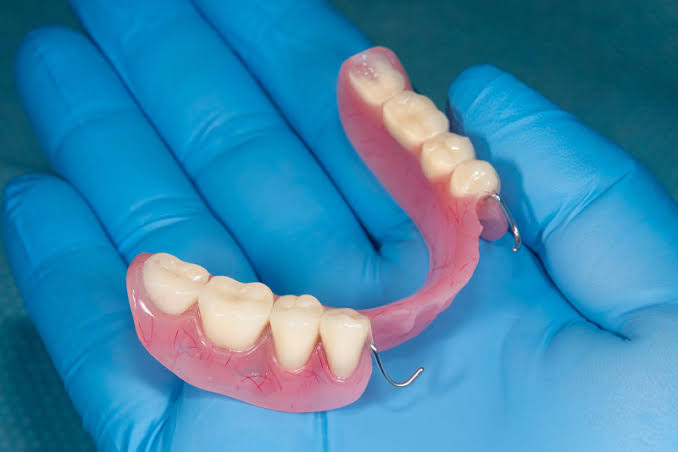
Partial dentures are removable dental appliances that replace one or more missing teeth, and they serve several valuable clinical functions. They restore chewing function. They also support facial structure and prevent remaining teeth from shifting, which helps patients who still retain some natural teeth. Here is more information on what missing teeth are, how dentures work, and the specific advantages they offer dental patients:
What Are Missing Teeth?
Missing teeth refer to the absence of one or more permanent teeth due to decay, gum disease, injury, or extraction. The gaps disrupt the alignment of surrounding teeth and place uneven pressure on the jaw, which can worsen existing oral health concerns. Partial dentures address these gaps and restore oral function.
What Are Partial Dentures?
Partial dentures are removable dental appliances designed to replace one or more missing teeth within a dental arch where some natural teeth remain. They consist of artificial teeth attached to a gum-colored base, which is supported by a metal framework that clasps onto existing natural teeth. This design provides stability, and it may offer a natural appearance. The appliance is custom-fitted to the patient’s existing tooth structure and bite dimensions.
Unlike full dentures, partial ones are designed for patients who retain some natural teeth in a given arch. A dentist takes precise measurements of the patient’s oral dimensions, and the appliance is crafted to integrate seamlessly with the remaining teeth. Each patient’s dental structure is unique, so the fitting process requires careful assessment to enable proper alignment.
How Can Partial Dentures Help?
Dentures restore oral function by filling the spaces left by missing teeth. When gaps go untreated, the surrounding natural teeth gradually shift toward the open space, which can lead to misalignment and bite problems that affect overall oral health. Partial dentures stabilize the remaining teeth. By occupying these spaces, they help maintain the overall structure of the dental arch, which is key for long-term oral function.
Tooth loss leads to bone resorption over time, which is a process in which the jawbone gradually deteriorates. Dentures support facial muscles and the jawbone, and while they do not fully prevent bone loss, they help distribute bite forces across the jaw. This reduces strain on remaining teeth. When bite pressure is more evenly distributed, the risk of excessive wear or damage to natural teeth is reduced.
What Are the Advantages?
Dentures offer several clinical and practical benefits for patients dealing with tooth loss, including:
- Restored chewing function: Dentures distribute bite pressure more evenly and let patients eat a wider range of foods.
- Improved speech: Dentures restore contact points, supporting clearer, more consistent speech patterns.
- Prevention of tooth shifting: Dentures maintain proper spacing and reduce the risk of long-term misalignment.
- Aesthetic restoration: Artificial teeth are designed to resemble natural teeth in color, shape, and size.
Partial dentures are removable, which makes them easy to clean and maintain. Patients can remove the appliance each night for cleaning; this supports better overall oral hygiene. Routine removal allows for thorough cleaning of both the appliance and the surrounding gum tissue. Consulting a dentist helps confirm whether dentures are appropriate for a specific case.
Address Your Missing Teeth Today
Partial dentures replace missing teeth, and they help restore oral function. They support chewing, speech, facial structure, and tooth alignment. If you are missing teeth and are looking to explore your options, speak with a dentist.