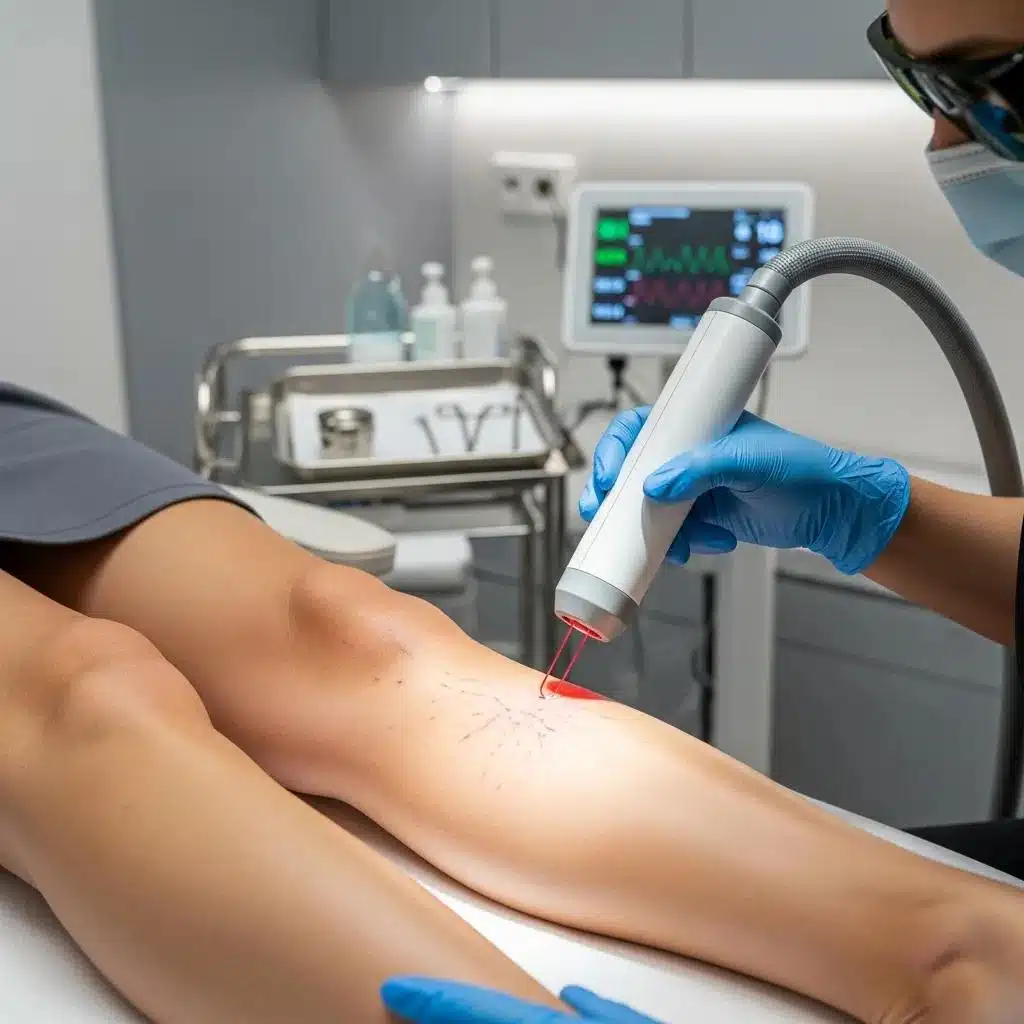
Spider veins appear as small blue or purple lines on the legs. Many people seek sclerotherapy for cosmetic and symptomatic reasons; the procedure treats these smaller visible veins through a chemical injection. Although it targets the small veins rather than the larger, bulging varicose veins, sclerotherapy also addresses discomfort. The treatment has been used since the 1920s, and it remains the most common treatment for eradicating spider veins.
How Sclerotherapy Treats Veins
Sclerotherapy uses a chemical solution injected directly into the abnormal vein. The solution damages the lining of the vein, which causes it to swell and collapse. Blood then reroutes to other veins; the treated vein fades within a few weeks. The injection targets the small blue and purple veins that spread across the legs, so the technique works differently from treatments designed for larger varicose veins.
Two forms of sclerotherapy exist. Foam sclerotherapy mixes the medication with air; this form treats larger veins because the foam stays in contact with the vein wall instead of becoming diluted by blood. Liquid sclerotherapy treats smaller veins through a fine needle; providers select the treatment based on vein size while matching the technique to the patient’s condition. Both methods collapse the target vein.
What a Session Involves
A sclerotherapy session lasts between 15 minutes and one hour. The procedure requires no anesthesia; providers perform it in an office setting. After the provider cleans the treatment area, an ultra-fine needle delivers the solution; the injection treats the targeted vein while limiting disruption to nearby tissue. Some patients feel minor stinging or cramping during the injection. The provider then withdraws the needle and massages the area.
Results and Aftercare Steps
Patients can resume normal activities immediately. A single session treats roughly 70 to 80% of the veins; results do not appear right away. Because treated veins may look darker before they fade, improvement continues for up to six months while visible changes develop gradually. Compression stockings and bandages are worn for three weeks to support healing and reduce swelling; sun exposure should be avoided. Repeated treatment occurs at four- to six-week intervals when additional treatment is needed.
Compression stockings serve an added purpose during recovery. They keep the medication in the treated area; they support venous drainage while reducing pressure on the treated veins. Wearing compression stockings becomes more difficult during warm weather, but consistent use supports recovery because the treated veins continue to heal.
Who Should Avoid Treatment
Some patients are not candidates for sclerotherapy. Pregnant patients and those who are breastfeeding are advised to wait; they return for reevaluation after that period. A history of significant blood-clotting disorders makes providers cautious because it increases treatment considerations; an active skin infection or ulcer in the treatment area rules out the procedure. Patients who cannot walk or wear compression stockings afterward also present concerns.
Schedule a Consultation Today
Sclerotherapy treats both the appearance and symptoms of spider veins. A thorough history and physical examination determine whether the procedure is appropriate; imaging helps confirm the diagnosis when additional evaluation is needed. Scheduling an evaluation provides the information needed to plan treatment, and the provider recommends the most appropriate approach after reviewing the examination findings.